


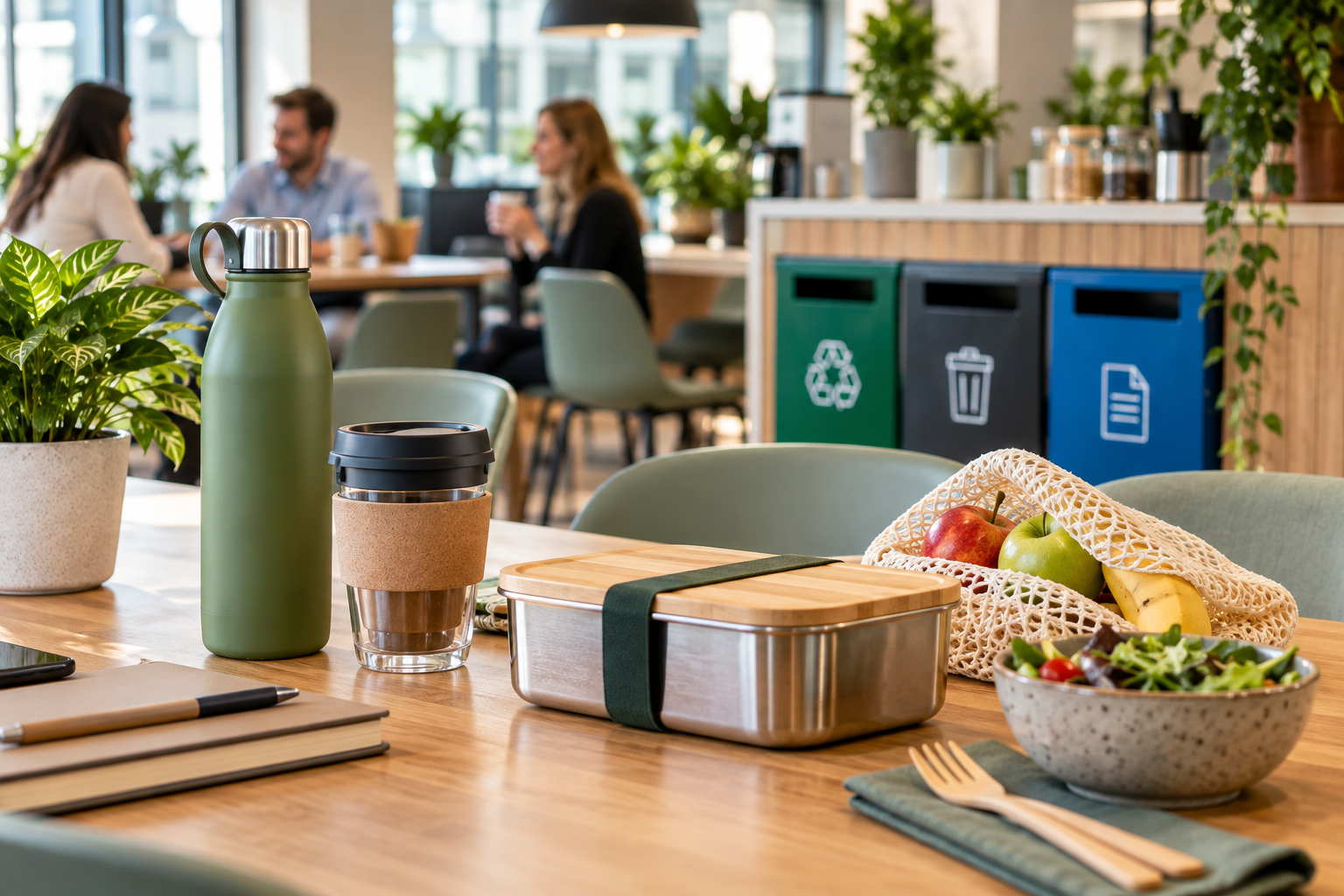
Plastic Free July provides a useful reminder that some of the biggest sustainability challenges can be tackled through relatively small changes in everyday behaviour.
For businesses, the workplace is a particularly good place to start.
From the packaging arriving with everyday supplies to disposable cups in the kitchen, many organisations use products every day that individually seem insignificant but collectively contribute to their environmental footprint.
The challenge is making better choices without making life more complicated for employees or procurement teams.
Start with what you already buy
Before introducing a new sustainability initiative, take a look at the products your organisation purchases regularly.
Could a disposable product be replaced with a reusable alternative? Is there a product containing recycled material that performs equally well? Could unnecessary packaging be eliminated?
Everyday categories such as catering disposables, stationery, cleaning products, packaging and washroom supplies can all provide opportunities.
The objective shouldn't simply be to find something labelled "green". It should be to understand the available alternatives and make informed choices based on factors such as materials, durability, recyclability, certifications and whole-life impact.
Reduce before you replace
One of the simplest principles of sustainable procurement is also one of the easiest to overlook: sometimes the best environmental choice is to use less.
That could mean reducing unnecessary single-use products, avoiding over-ordering, consolidating product ranges or reviewing how frequently deliveries are made.
A business ordering from numerous suppliers several times each week may also have opportunities to consolidate purchasing and deliveries.
Sustainability isn't only about what you buy. It can also be about how much, how often and how it reaches you.
Make sustainable choices easier
For sustainability initiatives to become established, they need to work in the real world.
If employees have to search through hundreds of products to identify a more responsible option, behaviour is unlikely to change consistently.
Organisations can instead create preferred product lists, highlight more sustainable alternatives and provide clear recycling or disposal information.
The easier the better choice becomes, the more likely it is to become the everyday choice.
Be careful with environmental claims
As demand for more sustainable products has grown, so has the number of environmental claims surrounding them.
Businesses should look beyond broad descriptions such as "eco-friendly" and consider the evidence behind a product's environmental credentials.
Recognised certifications, recycled-content information, responsible sourcing credentials and transparent product data can all help procurement teams make better-informed comparisons.
Small changes don't have to stay small
Plastic Free July encourages people to begin by changing everyday habits.
That's equally applicable to businesses.
A review of disposable cups might lead to a wider review of catering consumables. That might uncover opportunities in cleaning products, stationery or packaging. Before long, a relatively small initiative can begin influencing procurement across the organisation.
The important thing is to start somewhere, measure what works and keep improving.
At MBM, we help organisations identify more sustainable workplace products and make sense of the choices available.
If you'd like to explore practical ways of reducing waste or making your workplace procurement more sustainable, speak to the MBM team.
